Drone Regulations
Class G Airspace Explained: Where Drone Pilots Can Fly Freely


Airspace is one of the biggest sources of confusion for drone pilots. Many assume that if they’re far from an airport, they can fly freely—but that isn’t always the case. Understanding where you can legally launch without prior approval is a critical part of safe and compliant operations, and that’s where Class G airspace becomes especially important.
For drone pilots, Class G is often the only place where flights can begin without requesting authorization in advance. But while it offers more flexibility than controlled airspace, it still comes with rules that every pilot needs to understand before taking off.
What Is Class G Airspace?
Class G airspace is known as uncontrolled airspace, meaning it is not actively managed by air traffic control (ATC). Unlike controlled airspace, pilots are not required to request authorization before flying in most situations.
For drone pilots, this is significant. In Class G airspace, you can typically launch immediately without using systems like LAANC or submitting requests through FAA DroneZone.
However, “uncontrolled” does not mean unregulated. The FAA still governs how you operate within this airspace under Part 107 or recreational rules.
To understand the difference, it helps to compare controlled airspace types:
- Class B, C, and D airspace surround busy airports and always require authorization
- Class E often acts as transition airspace and may require authorization depending on altitude
- Class G sits below controlled airspace or in areas where ATC services are not provided
For a deeper understanding of how these rules fit into the broader regulatory framework, pilots often start with What Is Part 107, which explains how airspace fits into FAA drone regulations.
Where Class G Airspace Exists
Class G airspace is most commonly found in rural areas, low-density regions, and locations far from major airports. These environments typically have less air traffic, which reduces the need for active airspace management.
You’ll often find Class G airspace:
- over farmland and agricultural zones
- in remote or undeveloped regions
- in areas well outside airport boundaries
However, it’s important to understand that airspace is not just horizontal—it’s vertical.
In many locations, Class G airspace exists only up to a certain altitude, above which it transitions into Class E controlled airspace. This means a pilot could technically be in Class G at lower altitudes but enter controlled airspace by climbing higher.
Near cities, Class G airspace becomes far less common. Urban environments are typically surrounded by controlled airspace due to higher volumes of aircraft traffic.
Why Drone Pilots Prefer Class G Airspace
For drone pilots, Class G airspace offers a level of operational simplicity that is hard to match elsewhere.
Because no prior authorization is typically required, pilots can move quickly from planning to execution. This is especially valuable for time-sensitive missions such as inspections or mapping work, where delays can impact operations.
Commercial pilots often rely on Class G airspace for:
- agricultural inspections and crop monitoring
- land surveying and mapping
- rural infrastructure inspections
- recreational and training flights
The ability to launch without waiting for approval allows pilots to operate more efficiently, particularly in environments where conditions can change quickly.
However, this flexibility comes with responsibility. Pilots must still ensure they are operating safely and within FAA regulations.
What This Looks Like in Real Flights
Imagine a pilot tasked with inspecting a large agricultural property located miles away from the nearest airport. After checking an airspace map, the pilot confirms the area falls within Class G airspace.
Because the flight is outside controlled airspace, no LAANC authorization is required. The pilot can launch immediately and begin the inspection.
However, the pilot still needs to follow all operational rules. The drone must remain below 400 feet above ground level, stay within visual line of sight, and yield to any manned aircraft that may pass through the area.
Even in open farmland, helicopters or low-flying aircraft can appear unexpectedly. The absence of authorization requirements does not remove the responsibility to operate safely.
Rules That Still Apply in Class G Airspace
One of the most common misconceptions about Class G airspace is that it allows unrestricted flight. In reality, all standard FAA drone rules still apply.
Pilots must remain within 400 feet above ground level unless operating under a specific exception. They must maintain visual line of sight (VLOS) at all times and always yield to manned aircraft.
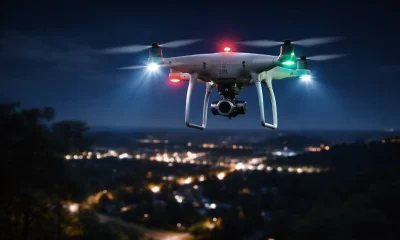
Night operations are permitted, but only if the drone is equipped with proper anti-collision lighting and the pilot has completed the required training. For more on this, see Fly at Night Part 107, which explains how night rules apply in real-world scenarios.
Pilots must also remain aware of NOTAMs (Notices to Air Missions) and temporary flight restrictions (TFRs), which can override normal airspace permissions.
The key takeaway is simple:
👉 Class G airspace removes authorization requirements—not safety responsibilities.
Class G vs Controlled Airspace
| Airspace Type | Authorization Required | Typical Location |
|---|---|---|
| Class G | No | Rural / low altitude |
| Class B / C / D | Yes | Around airports |
| Class E | Sometimes | Transition airspace |
Understanding this distinction is critical for flight planning. If you’re unsure how controlled airspace works without automated authorization systems, Controlled Airspace Without LAANC provides a detailed breakdown.
What Drone Pilots Get Wrong About Class G Airspace
Even experienced pilots sometimes misunderstand how Class G airspace works in practice.
A common mistake is assuming that “uncontrolled” means unrestricted. Pilots may overlook basic requirements like altitude limits or visual line of sight, which still apply regardless of airspace classification.
Another issue is failing to check for nearby airports. Airspace boundaries can change quickly, and a location that appears remote may still fall within controlled airspace at certain altitudes.
Some pilots also misunderstand vertical airspace transitions, climbing into controlled airspace without realizing it.
Finally, temporary flight restrictions are often ignored. Events, emergencies, or security operations can impose restrictions even in areas that are normally Class G.
These mistakes are avoidable with proper planning and situational awareness.
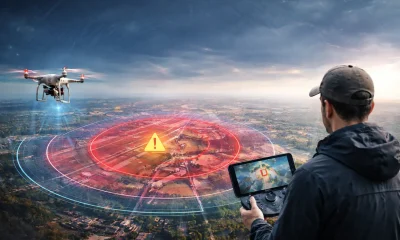
How to Know If You’re in Class G Airspace
Determining whether you are in Class G airspace is a critical step before every flight.
Pilots typically rely on a combination of tools:
- Sectional charts, which display airspace classifications
- Flight planning apps, including LAANC-enabled platforms
- FAA airspace maps, which show controlled vs uncontrolled zones
Rather than treating airspace as a static label, professional pilots approach it as a decision-making process. They verify their location, confirm altitude limits, and check for any temporary restrictions before launching.
This is where FlyEye’s approach to flight decisions becomes essential, combining regulatory understanding with real-world operational awareness.
How Class G Airspace Appears on the Part 107 Exam
Airspace knowledge is a core component of the FAA Remote Pilot exam, and Class G airspace is frequently tested.
Pilots are expected to interpret sectional charts, identify airspace classifications, and understand where authorization is required.
Exam questions often focus on:
- identifying Class G boundaries
- understanding altitude transitions
- recognizing when controlled airspace begins
Rather than memorizing definitions, the FAA tests whether pilots can make correct decisions based on real-world scenarios.
Class G Airspace in Canada vs the U.S.
While Class G airspace exists in both the United States and Canada, the regulatory frameworks differ slightly.
In Canada, uncontrolled airspace also allows more flexibility, but drone operations are governed by Transport Canada regulations, which introduce additional considerations such as proximity to bystanders and operational categories.
For pilots operating near airports or transitioning between jurisdictions, understanding these differences is important. The article Drone Near Airports Canada provides additional context for how Canadian rules apply in controlled environments.
Conclusion
Class G airspace is the most accessible environment for drone pilots in the United States. It allows operations without prior authorization in many cases, making it ideal for inspections, mapping, and recreational flying.
However, accessibility does not eliminate responsibility. Pilots must still follow FAA rules, maintain situational awareness, and verify airspace conditions before every flight.
Understanding where Class G exists, and how to operate within it safely, is one of the most important skills a drone pilot can develop.
For pilots asking, “Can I fly here?” the answer often starts with one step:
Helpful Resources
- Flight Check
- FAA Part 107 practice exams
- Federal Aviation Administration
- FAA Temporary Flight Restrictions
Frequently Asked Questions
Can drones fly freely in Class G airspace?
In most cases, yes—no authorization is required, but all FAA rules still apply.
Do I need LAANC in Class G airspace?
No. LAANC is only required for controlled airspace.
What altitude is Class G airspace?
It varies by location but typically exists at lower altitudes, often below Class E airspace.
Is Class G airspace safe?
Yes, when operated correctly. Pilots must remain aware of manned aircraft and follow all safety rules.