Drone Regulations
What is Part 107?


If you fly a drone commercially in the United States, you are operating under a specific federal framework — commonly known as Part 107.
This section of the Federal Aviation Regulations governs small unmanned aircraft systems (sUAS). It establishes certification requirements, operational limits, and pilot responsibilities for commercial drone activity in U.S. airspace.
Earning a Remote Pilot Certificate from the FAA means you are authorized to operate under this rule.
Part 107 Explained – Where It Comes From
Part 107 is formally titled 14 CFR Part 107 – Small Unmanned Aircraft Systems and is enforced by the Federal Aviation Administration.
It became effective in August 2016 as the FAA’s first comprehensive regulatory framework for commercial drone operations.
You can review the regulation directly:
Part 107 created a standardized pathway for businesses, photographers, inspectors, surveyors, and other professionals to operate drones legally.
Who Needs It?
Any pilot flying for business purposes must hold a Remote Pilot Certificate.
The FAA defines commercial intent broadly. If a flight supports a company, generates revenue, contributes to marketing, or advances a business objective, it likely falls under the commercial framework.
Recreational pilots operate under separate statutory rules. However, the moment a flight serves a business purpose, certification is required.
The distinction is about intent — not just payment.
What the Commercial Drone Rule Regulates
This regulatory structure sets baseline operating conditions designed to protect other airspace users and people on the ground.
It governs:
- Maximum altitude (generally 400 feet AGL unless near structures)
- Visual line of sight requirements
- Airspace authorization procedures
- Right-of-way obligations
- Operations over people and moving vehicles
- Pilot responsibility and pre-flight assessment
Rather than granting unlimited flexibility, the framework defines boundaries within which commercial flight must occur.
What It Does Not Automatically Allow
Although the rule enables commercial operations, it does not authorize every type of flight.
Beyond visual line of sight (BVLOS) operations require specific approval. Flights in controlled airspace require authorization. Certain higher-risk scenarios require waivers.
The FAA built flexibility into the system through a waiver process, but operators must demonstrate an equivalent level of safety before approval is granted.
The structure is permissive — but conditional.
How Part 107 Certification Works
To operate commercially, a pilot must pass the FAA aeronautical knowledge test and obtain a Remote Pilot Certificate. The exam covers airspace, weather, performance, regulations, and aeronautical decision-making.
Once certified, pilots must complete recurrent training and remain current with regulatory updates.
Certification represents both authority and responsibility. It allows commercial operation — but only within defined limits.
Why The Part 107 Rule Matters
This framework forms the backbone of the U.S. commercial drone industry.
This framework brought legal clarity to a rapidly growing field, defined enforcement authority, and established predictable operating standards.
More importantly, it separated hobby activity from professional aviation accountability.
Understanding it is not about memorizing test questions. It is about understanding the legal structure that governs commercial drone flight in the United States.
Frequently Asked Questions
Can I make money without certification?
No. Commercial operations require a Remote Pilot Certificate.
Does it apply to sub-250g drones?
Yes, if they are flown commercially.
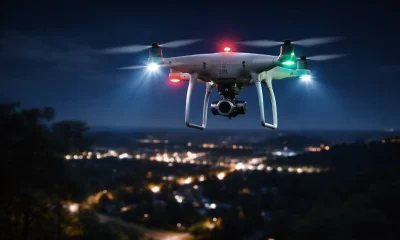
Can I fly at night?
Yes, provided current FAA night-operation requirements are met.
Is certification required for recreational flying?
No. Recreational pilots follow a separate statutory framework.
Helpful Tools
• Flight Check
• U.S. regulation guide
• FAA Part 107 practice exams
• Acronym directory
FlyEye Perspective
This rule is more than a test requirement. It is the operating foundation for commercial drone pilots in the United States.
If you fly for business, this is the structure you work within.
Professional operators treat it as a legal framework — not just a credential.
Part 107 begins with a simple truth: if you fly a drone commercially in the United States, you are almost certainly operating under Part 107.
Part 107 is the section of the Federal Aviation Regulations that governs small unmanned aircraft systems (sUAS). It establishes the certification requirements, operational limits, and responsibilities for commercial drone pilots in the U.S.
If you earn a Remote Pilot Certificate from the FAA, you are operating under Part 107.