Flight Decisions
Can You Fly a Drone in Canadian National Parks?


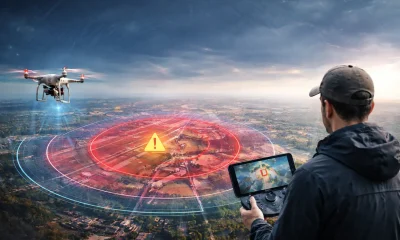
Drone National Parks Canada is one of the clearest compliance questions in Canadian aviation. In almost every case, flying a drone inside a Canadian National Park is illegal unless you have written authorization from Parks Canada. Unlike most drone topics, this restriction does not hinge on your certificate level — it is rooted in federal park law.
If you are visiting a National Park recreationally and you launch a drone without a permit, you are likely violating federal regulations.
Drone National Parks Canada – What the Law Says
Drone use inside Canadian National Parks is governed primarily by the Canada National Parks Act and regulations enforced by Parks Canada, not just Transport Canada’s Part IX drone rules.
Parks Canada explicitly prohibits the takeoff and landing of remotely piloted aircraft within park boundaries without a permit.
You can verify this directly:
- https://parks.canada.ca/voyage-travel/regles-rules/drones
- https://laws-lois.justice.gc.ca/eng/acts/N-14.01/
- https://tc.canada.ca/en/aviation/drone-safety
The critical point is this: without a permit, launching or landing a drone in a National Park is prohibited.
Because most drone flights require launch and recovery inside the park, the practical result is a near-total ban for recreational pilots.
Why Canadian National Parks Restrict Drone Flights
National Parks are federally protected ecological areas. The prohibition exists to protect:
- Wildlife and nesting habitats
- Natural soundscapes
- Visitor safety and experience
- Emergency and search-and-rescue operations
Even small drones can disturb wildlife, particularly in alpine and coastal environments. In addition, many parks rely heavily on helicopter support for rescue and wildfire response. Introducing an uncoordinated drone into that environment creates immediate safety concerns.
For that reason, drone National Parks Canada restrictions are applied broadly and consistently.
Does Your Drone Certificate Make a Difference?
In this case, certification does not override park law.
Whether you hold a Basic certificate, Advanced certificate, or operate a sub-250 g drone, the restriction on launching and landing without a permit still applies.
Advanced privileges allow you to operate in controlled airspace with authorization. They do not grant authority to operate inside federally managed protected lands.
Sub-250 g drones are not exempt either. Although they fall outside some sections of Part IX of the Canadian Aviation Regulations, they are still prohibited from being launched in National Parks without permission.
Are There Any Legal Exceptions?
Yes — but they are limited and formal.
Parks Canada may issue permits for:
- Scientific research
- Government operations
- Commercial filming
- Official search and rescue support
In some cases, operators may also require a Special Flight Operations Certificate (SFOC) from Transport Canada in addition to park authorization.
These approvals are not casual. They involve formal applications and operational justification.
If you do not have written authorization from Parks Canada, you should assume you cannot fly.
What About Flying From Outside the Park?
Some pilots attempt to stand outside park boundaries and fly inward. While Parks Canada regulations focus on takeoff and landing within park limits, flying into park airspace can still result in enforcement if wildlife, visitors, or operations are affected.
Moreover, many parks are surrounded by controlled or restricted airspace, which introduces separate aviation compliance issues. Before flying near any protected area, always verify surrounding airspace classification.
When in doubt, treat park boundaries as operational limits.
Penalties for Flying in Canadian National Parks
Violations of the Canada National Parks Act can result in significant penalties.
Fines may reach up to $25,000 for individuals, depending on the severity of the offence. Equipment seizure and court proceedings are also possible.
Because National Parks are federally protected environments, enforcement is taken seriously. Many investigations begin after visitor complaints or footage posted online.
Practical Compliance Standard
Professional drone operators treat Canadian National Parks as no-fly zones unless formal written authorization has been granted.
If your mission requires operations inside a National Park, contact Parks Canada in advance. Confirm permit requirements. Coordinate with Transport Canada if applicable. Carry documentation with you on site.
If you do not have written approval, do not launch.
Frequently Asked Questions
Can I fly a drone in Banff National Park?
No, unless you have a Parks Canada permit.
Does an Advanced certificate allow it?
No. Certification does not override federal park regulations.
Are micro drones allowed?
No. Launching or landing without authorization is prohibited.
Can I apply for permission?
Yes, but approval is typically limited to research, commercial, or official government operations.
Helpful Tools
- Full Canada drone regulations
- Test your knowledge
- Check mission legality instantly
- Pre-Flight Checklist
- Review Transport Canada guidance
FlyEye Perspective
Drone National Parks Canada is not a grey regulatory area. It is one of the clearest restrictions in Canadian drone law.
If you are inside park boundaries without a permit, the safest and most professional decision is simple: do not fly.
Protecting Canada’s protected lands is not just a regulatory requirement — it is part of responsible drone conduct.