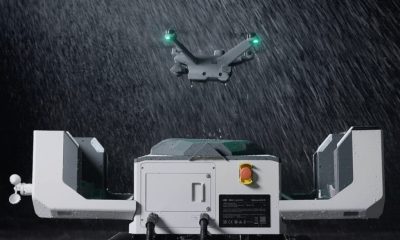
Drone AI
AI-Powered Drone Technology


AI-Powered Drone Technology- How AI is Integrated in UAV’s
AI-powered drone technology is revolutionizing the industry, pushing the boundaries of what these flying marvels can achieve. By integrating advanced AI systems, the AI-powered drone has evolved from a simple remote-controlled device into an autonomous machine capable of performing complex tasks with remarkable precision.
From optimizing agricultural productivity to streamlining logistics and enhancing emergency response, AI-powered drones are reshaping industries and redefining efficiency. These innovations aren’t just futuristic concepts—they’re actively transforming the way businesses operate and solve real-world problems today.
In this article, we’ll explore the foundations of AI-powered drone technology, its diverse applications, the cutting-edge advancements driving its evolution, and the challenges it faces. Join us as we delve into how AI is empowering drones to revolutionize industries and shape the future.
What Is AI-Powered Drone Technology?

AI-powered drone technology refers to the integration of artificial intelligence systems into drones, enabling them to perform tasks autonomously or with minimal human intervention. Unlike traditional drones that rely heavily on manual operation, AI-powered drones leverage advanced algorithms to process data, make decisions, and adapt to their environment in real time.
At the core of AI-powered drones are several key technologies:
- Machine Learning: Allows drones to analyze patterns and improve their performance over time, such as optimizing flight paths or detecting objects with higher accuracy.
- Computer Vision: Enables drones to interpret visual data from cameras and sensors, allowing them to identify objects, recognize faces, or map environments.
- Natural Language Processing (NLP): Some advanced drones can understand and respond to voice commands, enhancing ease of use.
- Real-Time Data Processing: AI ensures drones can process large volumes of data during flight, providing instant insights for critical tasks like anomaly detection or environmental analysis.
These capabilities transform drones into intelligent systems that can perform complex tasks such as autonomous navigation, obstacle avoidance, and even decision-making. For example, an AI-powered drone used in agriculture can analyze crop health data mid-flight and adjust its spraying patterns accordingly, optimizing resource usage and reducing waste.
The combination of AI and drones has opened new possibilities across industries, from streamlining operations to tackling challenges in real-time. As we dive into the applications and advancements of AI-powered drone technology, the true scope of its impact becomes increasingly evident.
Key Applications of AI in Drones
AI-powered drones are transforming industries by introducing efficiency, precision, and innovative solutions to traditional challenges. Here are some of the most impactful applications:
Precision Agriculture

AI-powered drones have become indispensable in modern agriculture, revolutionizing the way crops are monitored and managed. Equipped with advanced sensors and AI capabilities, these drones can:
- Analyze crop health using multispectral and thermal imaging.
- Identify areas needing irrigation, pest control, or fertilization.
- Optimize resource usage, reducing waste and improving yield.
For example, drones can fly over vast fields, collecting detailed data in minutes that would take days for manual surveys. AI processes this data, providing actionable insights for farmers to make informed decisions.
Infrastructure Inspection

AI-powered drones excel at inspecting critical infrastructure, such as bridges, buildings, and power lines, where manual inspections can be time-consuming and dangerous. Their capabilities include:
- Detecting structural anomalies, such as cracks, corrosion, or misalignments.
- Mapping and documenting inspection data with high precision.
- Reducing costs by minimizing the need for scaffolding or other access equipment.
By using AI to analyze collected data, these drones can identify potential issues early, preventing costly repairs or failures.
Emergency Response

In emergency situations, time is critical, and AI-powered drones provide a significant advantage. Their applications include:
- Assisting in search-and-rescue missions by locating missing persons with thermal imaging.
- Assessing disaster zones to prioritize areas needing immediate attention.
- Delivering medical supplies or essential items to remote or inaccessible locations.
AI enhances these missions by analyzing data in real time, enabling faster and more accurate decision-making, often saving lives in the process.
Delivery and Logistics

AI is redefining the logistics and delivery sector by enabling drones to:
- Optimize delivery routes based on real-time traffic and weather conditions.
- Ensure secure and precise package handling.
- Enhance efficiency in supply chain operations, reducing delivery times and costs.
Companies like Amazon and UPS are actively using AI-powered drones to pioneer last-mile delivery services, making them faster and more efficient than ever before.
Environmental Monitoring

AI-powered drones are vital for monitoring and protecting the environment, with applications including:
- Wildlife tracking and habitat mapping to support conservation efforts.
- Monitoring deforestation, illegal logging, and environmental degradation.
- Measuring air and water quality to identify pollution sources.
These drones gather critical data from hard-to-reach locations, and AI processes it to generate actionable insights for environmental scientists and policymakers.
Technological Advancements in Your AI-Powered Drone
AI-powered drones are at the forefront of innovation, with continuous technological advancements enhancing their capabilities and expanding their applications. Below are some of the key breakthroughs driving the evolution of this field:
1. Autonomous Navigation and Obstacle Avoidance
One of the most significant advancements in AI-powered drones is their ability to navigate autonomously. Using machine learning and computer vision, drones can:
- Map their surroundings in real time.
- Identify and avoid obstacles such as trees, buildings, or other flying objects.
- Adjust their flight paths dynamically based on changing conditions.
This capability is especially useful in complex environments, such as urban areas or disaster zones, where precision and adaptability are critical.
2. Enhanced Data Processing and Analysis
AI-powered drones are equipped with advanced processors and algorithms that allow them to analyze massive amounts of data on the fly. These innovations include:
- Real-time data processing for applications like crop health analysis or infrastructure inspections.
- Machine learning models that improve accuracy in tasks such as object detection or pattern recognition.
- Integration with cloud-based systems for seamless data sharing and storage.
These advancements enable drones to deliver actionable insights faster and more reliably than ever before.
3. Integration of IoT and Edge Computing
The integration of Internet of Things (IoT) technology and edge computing has transformed the operational capabilities of AI-powered drones. Key benefits include:
- Connecting drones to a network of sensors and devices, enabling coordinated operations.
- Offloading computational tasks to the drone’s edge devices, reducing latency and improving efficiency.
- Enhancing communication between multiple drones, allowing for synchronized swarm operations.
This combination is particularly impactful in industries like agriculture and logistics, where real-time coordination is vital.
4. Advanced Imaging and Sensor Technology
Modern AI-powered drones are equipped with cutting-edge imaging and sensor systems, such as:
- High-resolution cameras for detailed visual data capture.
- Multispectral and hyperspectral sensors for specialized tasks like crop analysis or mineral detection.
- Thermal imaging for search-and-rescue missions or monitoring equipment performance.
These sensors, combined with AI analysis, unlock new possibilities for data-driven applications across industries.
5. Swarm Intelligence
Swarm intelligence, inspired by the behavior of social insects like bees and ants, is an emerging technology in AI-powered drones. This advancement enables:
- Coordination among multiple drones to complete complex tasks efficiently.
- Distribution of tasks like search-and-rescue operations or large-scale mapping.
- Redundancy in operations, ensuring continued performance even if one drone fails.
Swarm intelligence represents a leap forward in scalability and efficiency for drone operations.
Challenges and Limitations of AI-Powered Drones
Despite the transformative potential of AI-powered drones, their adoption and deployment face several challenges and limitations that need to be addressed for broader scalability and efficiency.
1. Regulatory Hurdles and Compliance

Governments and aviation authorities impose strict regulations on drone operations to ensure safety and privacy. These include:
- Limitations on flying in certain airspaces or at specific altitudes.
- Requirements for certifications, permits, and adherence to local laws.
- Challenges in standardizing regulations across regions, complicating operations for businesses with international reach.
Navigating these regulations can be time-consuming and may deter smaller operators from fully embracing AI-powered drones.
2. Privacy and Ethical Concerns

AI-powered drones are often equipped with advanced cameras and sensors that can capture extensive data. This raises issues such as:
- Concerns about surveillance and misuse of collected data.
- Ethical dilemmas surrounding AI decision-making in critical scenarios, like emergency responses or military applications.
- Balancing innovation with individual privacy rights and societal norms.
Building trust and implementing robust data protection measures are essential to addressing these concerns.
3. Limited Battery Life and Payload Capacity
The performance of AI-powered drones is constrained by current battery and payload technologies:
- Short flight times restrict their range and operational efficiency, particularly for long-duration tasks like inspections or mapping.
- Limited payload capacity restricts the types of equipment or goods drones can carry, affecting their versatility in applications like delivery or surveying.
Advancements in battery technology and lightweight materials are critical to overcoming these limitations.
4. Cost of Deployment and Maintenance
Integrating AI systems into drones significantly increases their cost, making them less accessible for smaller businesses or recreational users. Additional costs include:
- Ongoing maintenance and repairs, especially for high-end AI-powered drones.
- Expenses related to training personnel to operate and manage these advanced systems.
As AI technology becomes more widespread, economies of scale may help reduce costs, but for now, affordability remains a challenge.
5. Reliability and Robustness of AI Systems
AI-powered drones rely on complex algorithms and real-time data processing, which can sometimes falter under unpredictable conditions:
- Adverse weather, such as strong winds or heavy rain, can disrupt operations.
- Errors in AI decision-making or sensor readings can lead to accidents or inefficiencies.
- Dependence on high-quality data for training AI models, which may not always be available.
Ensuring reliability and robustness through rigorous testing and redundant systems is vital for these drones to perform consistently.
6. Ethical Use of AI in Autonomous Operations
The use of AI in drones raises important ethical questions, such as:
- Ensuring AI decisions are transparent and accountable, particularly in life-or-death scenarios.
- Addressing concerns about autonomous drones replacing human jobs in certain industries.
- Mitigating risks of AI misuse in malicious or harmful applications.
Ethical frameworks and global standards are needed to guide the responsible use of AI in drones.
Future of AI-Powered Drone Technology
The future of AI-powered drones is incredibly promising, with advancements poised to transform industries and unlock new possibilities. Emerging trends and innovations are setting the stage for a world where drones play an even more significant role in daily life and business operations.
Swarm Intelligence and Collaborative Drones
- The concept of swarm intelligence, inspired by the behavior of social insects, is advancing rapidly.
- Future drones will operate in coordinated groups, communicating with each other to execute complex tasks like large-scale mapping, search-and-rescue missions, or precision agriculture.
- Collaborative drone systems will improve efficiency, scalability, and reliability, especially in industries requiring synchronized operations.

Enhanced Autonomy and Decision-Making
- AI will continue to evolve, enabling drones to make more sophisticated decisions autonomously.
- Advanced machine learning algorithms will allow drones to predict and respond to dynamic changes, such as weather conditions or unexpected obstacles.
- Fully autonomous drones will handle end-to-end operations, from planning to execution, reducing the need for human intervention.
Integration with 5G and Cloud Computing
- The rollout of 5G networks will revolutionize drone connectivity, enabling faster data transmission and real-time processing.
- Integration with cloud computing will allow drones to offload intensive tasks, such as data analysis, to remote servers, enhancing performance.
- These technologies will enable seamless coordination between drones and other IoT devices, improving operational efficiency.
Advanced AI Models and Real-Time Analytics
- Future AI models will be more robust and capable of handling diverse scenarios with greater accuracy.
- Real-time analytics powered by AI will provide instant insights, enhancing applications like infrastructure inspections, environmental monitoring, and emergency response.
- AI-driven drones will offer predictive capabilities, allowing industries to anticipate problems before they arise.
Improved Battery and Propulsion Technologies
- Innovations in battery technology, such as solid-state batteries, will extend flight times and increase range.
- Enhanced propulsion systems will enable drones to carry heavier payloads, expanding their use in logistics and delivery.
- Renewable energy integration, like solar-powered drones, will support sustainable operations.

Expanded Applications Across Industries
- The capabilities of AI-powered drones will lead to their adoption in emerging sectors, such as advanced healthcare logistics and urban planning.
- Urban air mobility (UAM) systems could integrate AI-powered drones for passenger transport, creating new opportunities in the transportation industry.
- AI-powered drones will also play a critical role in addressing global challenges, such as disaster relief, climate monitoring, and conservation.
Conclusion
AI-powered drone technology is revolutionizing the way industries operate, offering unprecedented levels of efficiency, precision, and innovation. From agriculture and infrastructure inspection to emergency response and environmental monitoring, these intelligent drones are redefining the boundaries of possibility.
As advancements continue, AI-powered drones will become even more integral to solving complex challenges, enabling industries to optimize operations and achieve their goals faster. However, addressing challenges such as regulatory hurdles, privacy concerns, and technological limitations will be crucial for their sustainable and ethical growth.
The future of AI-powered drones is bright, with opportunities spanning collaborative swarm intelligence, enhanced autonomy, and integration with cutting-edge technologies like 5G and cloud computing. As we embrace these innovations, it’s clear that drones powered by AI are not just tools—they are the key to unlocking new frontiers in technology and industry.
Whether you’re an industry leader, an enthusiast, or simply curious about the possibilities, staying informed about AI-powered drone technology will empower you to adapt to and benefit from this transformative wave of innovation.
For more information on technologies integrated into drones visit our page.